
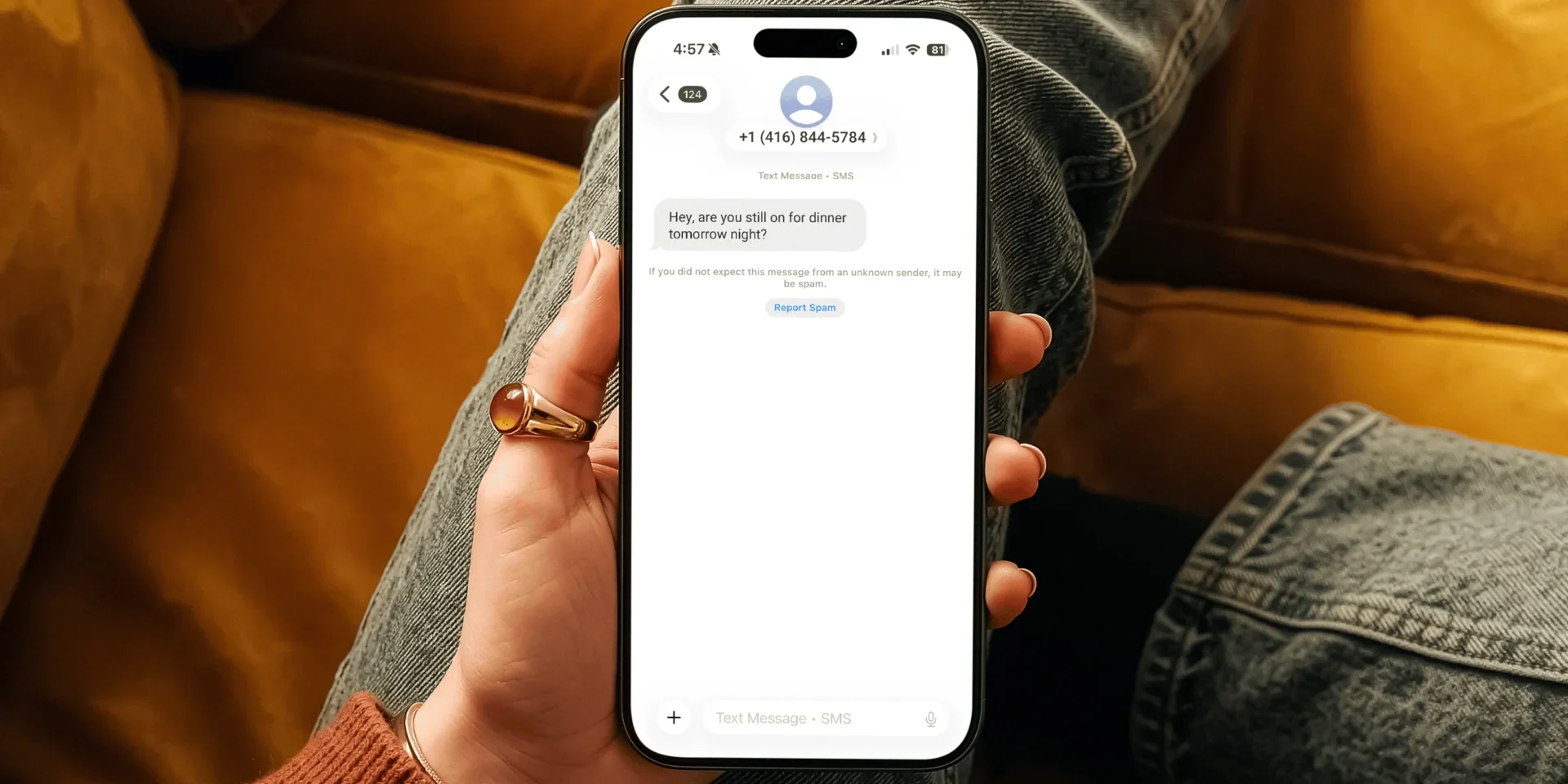
You get a text from an unfamiliar number: “Hey, are we still on for dinner tomorrow?”
Your first thought might be that the message was meant for someone else, and the sender has the wrong number. You may even want to reply, “Sorry, I think you have the wrong number!” But before you respond, know that this could be the start of a scam.
Wrong-number text scams use unexpected messages to start conversations with strangers. What seems like an innocent mix-up can become an attempt to gain your trust, steal your personal information, or convince you to send money.
How Do Wrong-Number Text Scams Work?
If you respond to the text, the sender may apologize for the mistake and keep the conversation going. They might ask about your day, share personal stories, or look for common interests to make the conversation feel natural. Over time, their goal may be to build a friendship or even a romantic relationship.
Once they've gained your trust, they may introduce an investment opportunity, often involving cryptocurrency, and promise easy profits. They might direct you to a fraudulent investment platform that displays fake earnings to convince you to deposit more money. Any funds you send could go directly to the scammer.
Even if the conversation never reaches that point, replying to an unexpected text can confirm that your phone number is active, increasing the likelihood of receiving additional scam or spam messages.
The financial impact of text scams is significant. According to the Federal Trade Commission (FTC), consumers reported losing $470 million to scams that started with text messages in 2024. That is more than five times the amount reported in 2020. Wrong-number messages were among the common types of text scams reported to the FTC.
How to Recognize a Wrong-Number Text Scam
Watch for these warning signs:
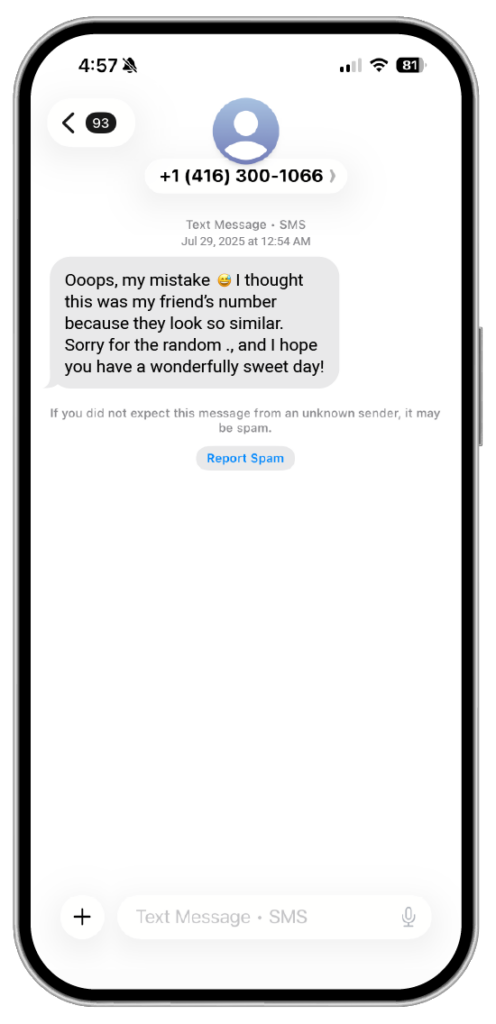
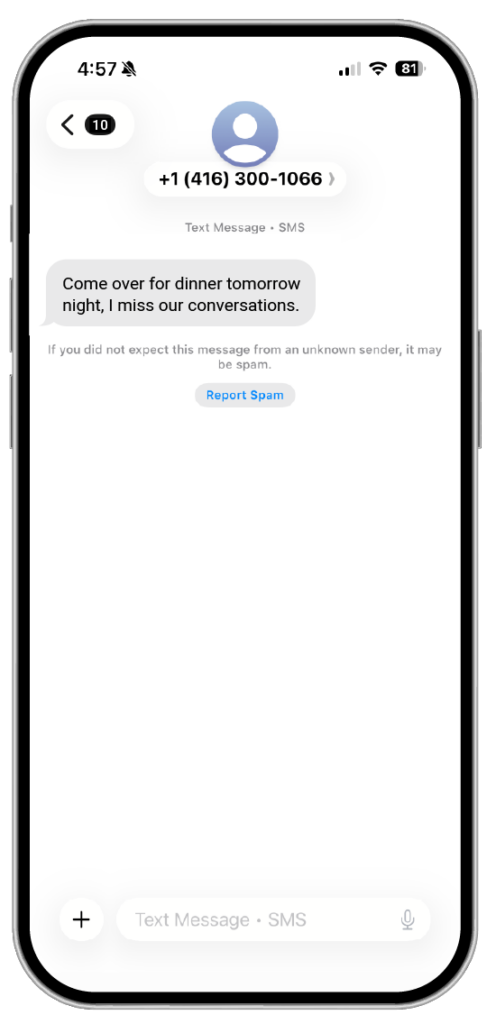
A single message may not reveal the sender’s intentions. The important thing is to avoid assuming an unfamiliar person is trustworthy just because the conversation starts politely.
How to Protect Yourself From Text Scams
A few simple steps can help reduce your risk of falling for a wrong-number text scam.

Don't reply to unexpected messages.
Avoid responding, even if you only want to correct the sender's mistake. Don’t feel obligated to respond just to be polite. If you don't recognize the sender, it's safest to leave the message unanswered and delete it.

Block the number and report the message as spam.
Use your phone's options to report the text as spam or junk and block the sender. You can also forward suspicious text messages to 7726 (SPAM) to help your wireless provider identify and block similar messages. Reporting options vary by phone and messaging app.

Never click suspicious links or share personal information.
Never share your Social Security number, account details, passwords, or financial information. Avoid clicking links in unexpected texts, even if the message appears harmless.

Be cautious with online investment offers.
Don't trust investment advice or promises of easy profits from someone you first met through an unexpected text. Be especially careful if the person encourages you to invest in cryptocurrency or asks you to transfer money to an unfamiliar platform.

Limit where you share your phone number.
Be mindful of posting your phone number publicly online. Although this cannot prevent every scam, limiting access to your contact information may reduce some opportunities for unwanted contact.
What If I replied to a wrong-number text?
If you've already responded to a wrong-number text, don't panic. Replying doesn't automatically mean you've been scammed or your phone has been hacked. Stop communicating with the sender, block the number, and report the message if it appears suspicious.
If you clicked a link, shared sensitive information, or sent money, take action as soon as possible. Contact your financial institution if your account or payment information may be at risk, change any compromised passwords, and report the incident to the FTC at ReportFraud.ftc.gov.
When in Doubt, Don't Respond
Wrong-number text scams work because they rely on curiosity, politeness, and the desire to be helpful, and scammers know it. A message that seems harmless can be the first step in a longer effort to gain your trust and steal your money.
You don’t owe a response to anyone you don’t know. Staying quiet is the safest answer, and you can simply block, delete, and report the message.
If you're ever unsure about a text message or think you've shared information with a scammer, contact Park View for guidance on what to do next.
Share This
You May Also Like
Got a Wrong-Number Text? It Could Be a Scam
Should You Freeze Your Credit? What to Know Before You Do