
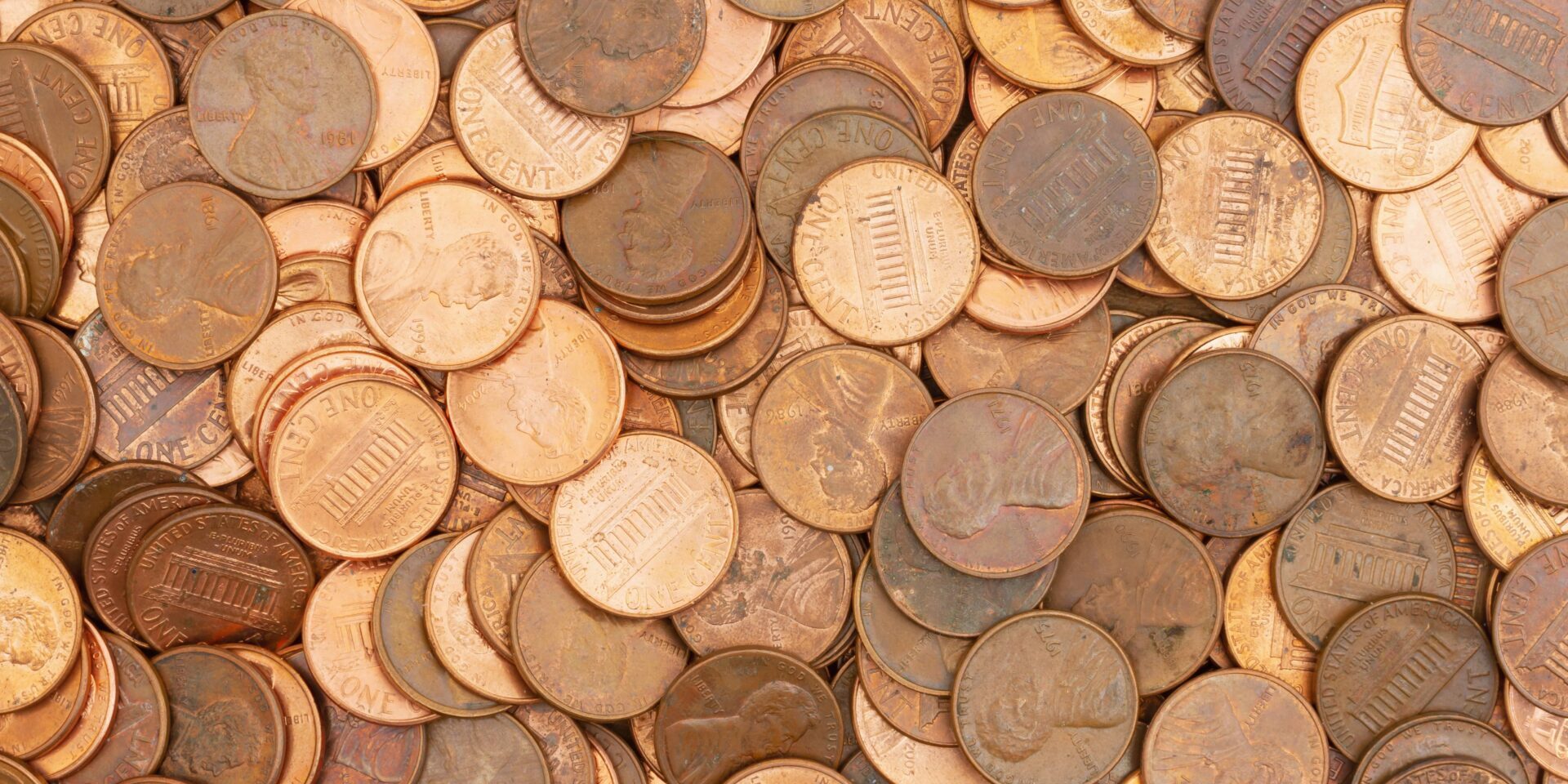
For more than two centuries, the penny has been a staple of American currency, jingling in pockets, lining cash registers, and filling jars on countertops everywhere. Introduced in 1793, it quickly became a fixture in everyday transactions and a marker of value in a growing nation. On November 12, 2025, the U.S. Mint pressed its final batch of one-cent coins, officially bringing the penny’s long history to a close.
But why now? What prompted the Treasury to end production of this iconic coin, and how will its disappearance affect the way we use cash? In this article, we’ll explore the reasons behind this historic decision and what a penny-free future holds for our cash and culture.
Farewell to the Penny: The End of an Era
For many, the penny is more than just a coin—it’s woven into the fabric of American memories. Who hasn’t bent down to pick up a penny for good luck, or dropped one into a wishing well with a silent hope? Pennies have helped children learn to count, been pressed into tiny hands as allowance, and gathered in piggy banks for a future treat. They’ve filled donation jars at checkout counters, supporting causes big and small.
It feels strange to say goodbye to a piece of history that has been with us since the birth of the nation. On November 12, 2025, the presses at the U.S. Mint in Philadelphia struck their final rhythm. They produced the last batch of one-cent coins, effectively closing the book on more than two centuries of minting history.
Why the Penny Was Discontinued
The decision to retire the penny was not made lightly. It involved years of debate, studies, and resistance. Ultimately, the move boils down to a mix of hard economic data and shifting consumer behavior.
The Upside-Down Economics of Production
The most compelling argument against the penny has always been the price tag attached to making it. It is a strange economic paradox when money costs more to make than it is worth.
In recent years, the cost of zinc and copper, the primary metals used in minting, has skyrocketed. By the time the final batch was pressed this past November, it cost the U.S. Mint nearly 4 cents to produce and distribute a single 1-cent coin. This negative seigniorage (the difference between the value of money and the cost to produce it) meant the government was losing millions annually just to keep change in our pockets. By discontinuing the penny, the U.S. Treasury estimates an annual saving of approximately $56 million. These are taxpayer funds that can now be redirected to more vital financial infrastructure.
Inflation and Diminished Value
When the penny first entered circulation in the late 18th century, it was a respectable sum of money. You could buy groceries or a meal with a handful of them.
Fast forward to today, and the penny’s purchasing power is virtually nonexistent. There is nothing in the modern American marketplace that costs one cent, and because they hold so little value, they often function as “trash” in the monetary system. We receive them in change, but we rarely spend them. They sit in jars, get vacuumed up in cars, or are simply left in the “take a penny” tray. Some say they had become a nuisance rather than a currency.
Following Global Trends
The United States is actually somewhat late to this party. The global trend has been moving away from low-denomination coins for decades.
- Canada: Our northern neighbors phased out their penny in 2012. Their transition was smooth, and the economy did not suffer.
- Australia and New Zealand: Both nations eliminated their 1- and 2-cent coins in the early 1990s.
- Europe: Several countries using the Euro have stopped minting 1- and 2-cent coins.
The U.S. Treasury looked closely at these case studies and in almost every instance, the removal of the smallest coin led to greater efficiency at the register and cost savings for the government, without causing inflation.
What Happens Next?
So, the presses have stopped. Does that mean your pennies are worthless? No, but the way we handle cash is about to change.
The Rounding System
The most immediate change you will notice is at the checkout counter. According to the Federal Reserve Bank of Atlanta, the United States will adopt a rounding system similar to the one used in Canada. This applies only to cash transactions.
If you pay with a credit or debit card, or mobile wallet, you will still be charged to the exact cent. Electronic payments do not require physical coins, so a charge of $19.99 remains $19.99.
However, if you pay with cash, the total bill will be rounded to the nearest nickel (5 cents).
- Totals ending in 1, 2, 6, or 7 will round down.
- Example: A charge of $10.02 becomes $10.00.
- Totals ending in 3, 4, 8, or 9 will round up.
- Example: A charge of $10.04 becomes $10.05.
The system is designed to be fair. Over time, the “rounding up” and “rounding down” tend to cancel each other out for consumers, and it will speed up lines, as cashiers no longer have to count out individual pennies.
The Legacy of the “Lucky Penny”
While no new pennies are being made, billions remain in circulation, and they are still legal tender. You can continue to use them to pay for goods if you have them, though retailers are likely to phase them out of their drawers quickly.
Financial institutions, including Park View, will continue to accept rolled pennies for deposit, and coin-counting machines will remain a popular option for those looking to cash in their jars.
A New Chapter for Currency
The death of the penny acknowledges that our economy has grown and changed and moves us one step closer to a cashless society, though physical money still holds a vital place in our world.
While we might miss the copper glint in a fountain or the satisfaction of finding a heads-up penny on the sidewalk, the efficiency gained is undeniable. So, take a look at those pennies in your jar. They are no longer just loose change; they are now a closed chapter of American history.
Share This
You May Also Like

How to Prevent Check Fraud: 5 Ways to Protect Your Money

Private vs. Federal Student Loans: What to Know Before Borrowing